
Healthy Homemade Dog Food...
Helping Your Dog Live Longer, One Meal at a Time
Download Your FREE Dog Longevity Guide...
Simply Enter Your Info Below
HOW WE HELP YOUR DOG LIVE LONGER
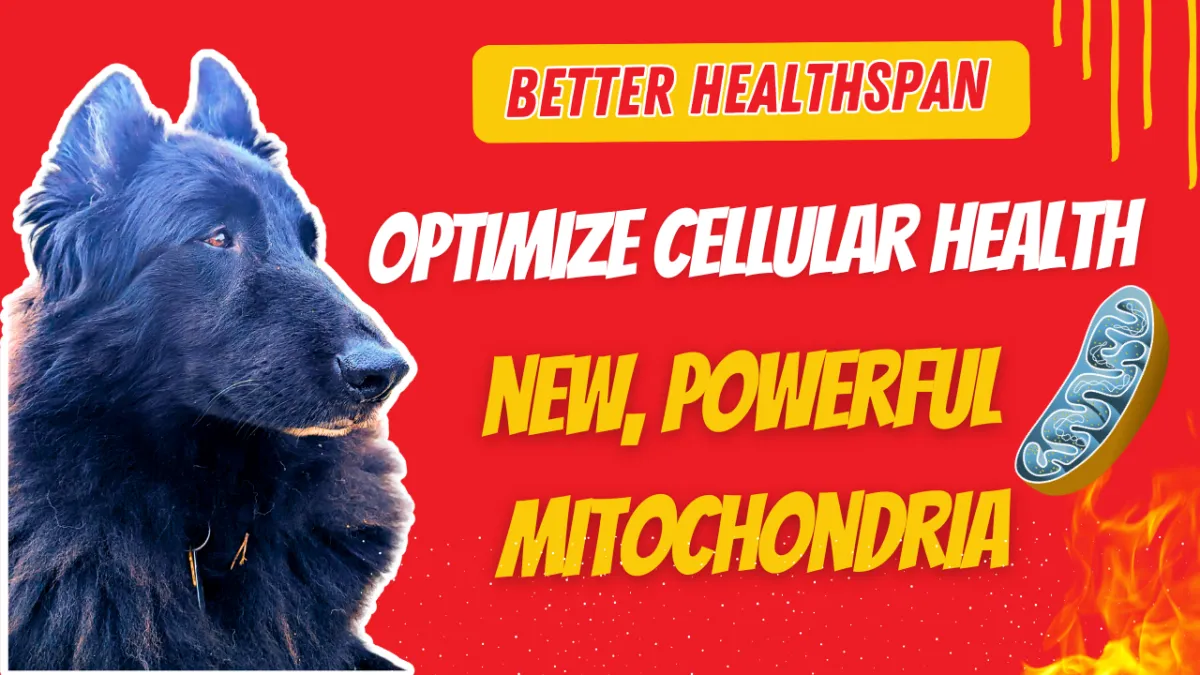
🦮 Reverse Ageing at a Cellular Level for a Longer, Happier Life 🦮
Simple diet, supplement, and at-home methods to re-program your pup's stem cell production, and help them produce new, young, strong mitochondria. Click Here to Help Your Adult or Senior Dog Live Longer

END the Cycle That Causes Stiff Joints, Chronic Disease...
We start in their bowl, and work our way inside to slam the door shut on the horrible, internal cycle that can age your dog prematurely, and even shorten their life. Check Out Our Articles - Click Here
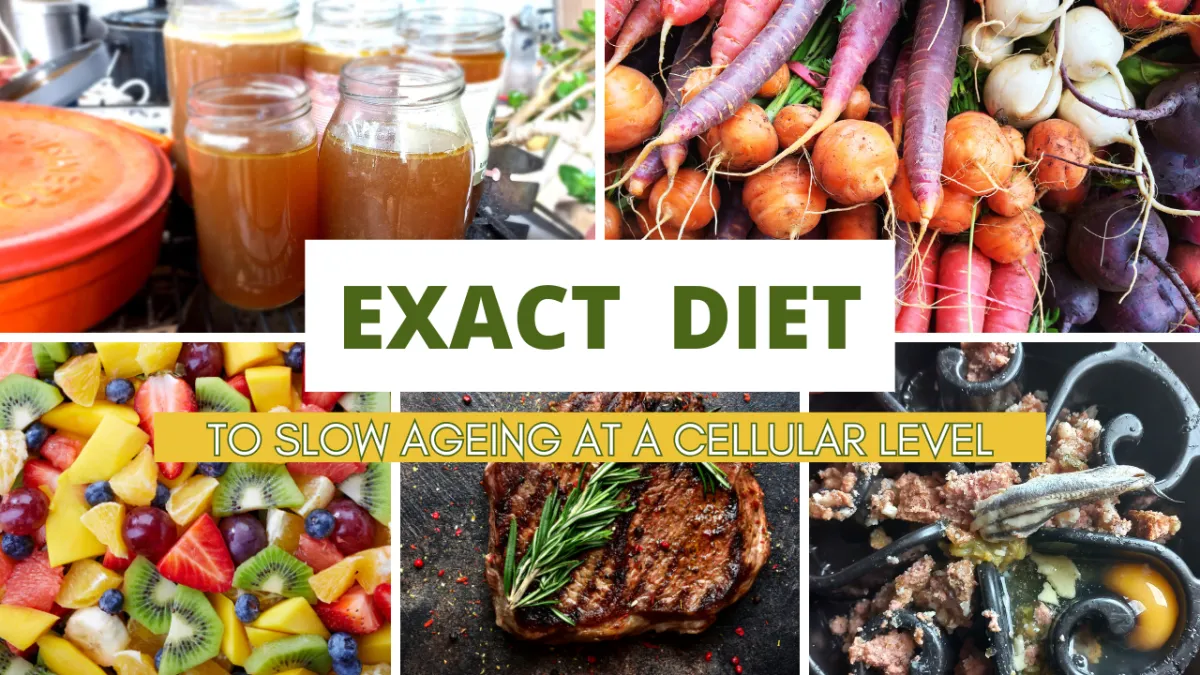
🥩 What to Eat, EXACTLY How Much
Learn exactly how much food, which foods to feed them, and which food-supplements can help them improve both their health span and their lifespan!
Need to feed kibble? Don't worry, we'll show you how to dramatically improve it... for almost no-cost.
Get Your FREE Guide - Click Here
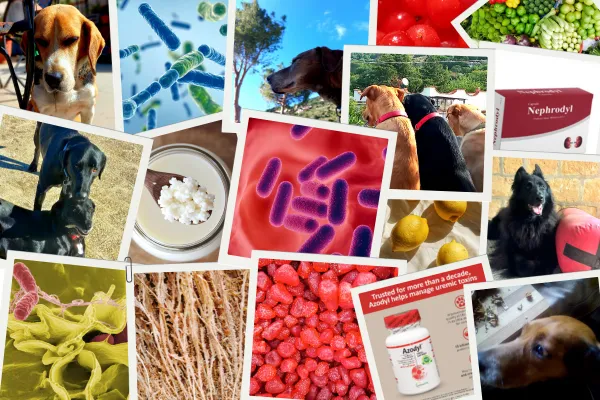
Best Probiotics for Dogs with Kidney Disease (CKD Gut–Kidney Guide)
Veterinarians Are Using This Gut Strategy for Dogs with CKD 🐕🧠🩺
Why the Best “Kidney” Support Might Start in the Gut
Chronic Kidney Disease (CKD) in dogs is often treated as a filtration problem.
But what if part of the stress on the kidneys isn’t coming from the kidneys at all?
What if it’s coming from the gut?
In recent years, veterinary and human nephrology research has increasingly focused on something called the gut–kidney axis — the powerful biochemical relationship between intestinal bacteria and kidney health.
And here’s the big insight:
👉 Many uremic toxins are produced by gut bacteria — not the kidneys themselves.
That means supporting the gut may reduce the burden placed on already struggling kidneys.
Let’s break this down clearly, practically, and responsibly so we can keep your pup living longer, and thriving, with CKD...
Best Probiotics for Dogs with Kidney Disease (CKD Gut–Kidney Guide) Table of Contents
Veterinarians Are Using This Gut Strategy for Dogs with CKD 🐕🧠🩺
Why the Best “Kidney” Support Might Start in the Gut
What Happens to the Gut in Chronic Kidney Disease?
🧬 Nerd Alert: The Uremic Toxin Cycle + How to Help Reduce Uremic Toxins Naturally in Dogs with CKD
The 3 Core Components of Gut Support for CKD
1️⃣ Specific Probiotic Strains 🦠
3️⃣ Xylo-Oligosaccharides (XOS) 🔬
Can You Build This Stack Naturally?
Why Whole-Body Support Matters in CKD
Frequently Asked Questions (FAQ)
❓ Is kefir enough, or do I need a supplement?
❓ Can probiotics lower creatinine levels?
What Happens to the Gut in Chronic Kidney Disease?
When a dog develops CKD (Stage 1–4), kidney filtration declines. That part we know.
But something else happens behind the scenes:
🦠 Beneficial bacteria decrease
🧪 Protein-fermenting bacteria increase
⚠️ Intestinal barrier integrity may weaken
💀 Production of uremic toxin precursors rises
As kidney function drops, waste products accumulate in the bloodstream. Some of those compounds then diffuse into the gut, where bacteria metabolise them into uremic toxins.
Two of the most studied include:
Indoxyl sulfate
p-Cresyl sulfate
These compounds are absorbed back into circulation — and guess who has to deal with them?
The kidneys.
So now, instead of just filtering normal metabolic waste, the kidneys are dealing with additional toxin load generated in the gut.
The gut becomes a source of kidney stress — not just a bystander.
🧬 Nerd Alert: The Uremic Toxin Cycle + How to Help Reduce Uremic Toxins Naturally in Dogs with CKD
In both human and animal CKD models:
Dietary protein → broken down by gut bacteria
Produces indoles and phenols
Absorbed into bloodstream
Converted by the liver into indoxyl sulfate & p-cresyl sulfate
Kidneys attempt to excrete them
Accumulation worsens renal damage
Research in nephrology journals has shown that elevated indoxyl sulfate levels are associated with:
Increased oxidative stress
Tubular cell injury
Fibrosis progression
Reducing gut production of these precursors may reduce systemic burden.
This is where probiotics and prebiotics enter the picture.
What Are Renal Synbiotics?
Some veterinary clinics recommend supplements sometimes referred to as renal synbiotics — combinations of:
🦠 Specific probiotic strains
🌿 Targeted prebiotic fibers
🔬 Specialised oligosaccharides
These are not “kidney drugs.”
They work upstream — in the gut.
Their goal is simple:
👉 Shift gut metabolism away from protein fermentation
👉 Encourage fiber fermentation instead
👉 Reduce toxin precursor production
👉 Support gut barrier integrity
Commonly used veterinary synbiotic product:
Nephrodyl
Azodyl
(Always consult your veterinarian before using any product.)

The 3 Core Components of Gut Support for CKD
1️⃣ Specific Probiotic Strains 🦠
Not all probiotics are equal.
Renal-focused synbiotics often include strains like:
Bifidobacterium species
Lactobacillus species
Streptococcus thermophilus
These bacteria may:
✔️ Compete with toxin-producing microbes
✔️ Reduce indole production
✔️ Improve short-chain fatty acid (SCFA) production
✔️ Support mucosal barrier integrity
🤓 Nerd Alert 2
Studies in dialysis patients and CKD models show synbiotic supplementation may:
Reduce serum indoxyl sulfate
Improve inflammatory markers
Improve bowel transit time
While canine-specific large trials are still limited, the mechanism is biologically plausible and increasingly explored in veterinary nephrology.
2️⃣ Inulin (Not Insulin!) 🌿
You probably already know this, but just to keep it clear:
❌ Insulin = hormone
✅ Inulin = prebiotic fiber
Inulin is a fermentable fiber that feeds beneficial bacteria.
When fermented, it:
Produces short-chain fatty acids (especially butyrate)
Lowers colonic pH
Suppresses growth of toxin-producing microbes
Encourages saccharolytic (fiber-based) metabolism
Lower colonic pH reduces phenol and indole production.
🧬 Nerd Alert 4
Human CKD studies have shown that inulin supplementation can:
Reduce p-cresyl sulfate levels
Improve gut microbiota composition
Decrease inflammatory markers
In dogs, fermentable fiber has been shown to:
Shift nitrogen excretion toward fecal elimination
Reduce ammonia production
This is a major benefit in kidney compromise.
3️⃣ Xylo-Oligosaccharides (XOS) 🔬
XOS is a specialized prebiotic fiber.
It is particularly effective at feeding Bifidobacteria, which are heavily used in renal synbiotic formulas.
Why is that important?
Because bifidobacteria:
Favor saccharolytic metabolism
Compete with proteolytic toxin producers
Improve microbial balance
Enhance gut barrier function
🧬 Nerd Alert 5
CKD models show XOS supplementation can:
Increase bifidobacteria abundance
Reduce uremic toxin precursors
Improve microbial diversity
This makes it a strategic prebiotic addition — not just generic fiber.
Can You Build This Stack Naturally?
Some of these bacteria and fibers are available through food-based approaches.
For example:
🥛 Kefir contains multiple probiotic strains
🌿 Inulin can be purchased in bulk powder
🔬 XOS is available as a supplement
Kefir in particular is often emphasised because it contains billions of live organisms and multiple strains.
However:
⚠️ Not all kefir batches contain the exact therapeutic strains used in clinical synbiotics.
So the choice becomes:
Convenience and precision (formulated supplement)
orWhole-food strategy with fiber support
Both approaches aim to shift gut ecology.
Important: This Is Not a Cure
Let’s be absolutely clear.
❌ Synbiotics do not cure CKD.
❌ They do not replace renal diets.
❌ They do not replace medications.
They are supportive.
When combined with:
💧 Proper hydration
🥣 A kidney-friendly diet
💊 Vet-prescribed medications
📉 Phosphorus control
🧂 Sodium moderation
They may help reduce metabolic burden and potentially slow progression.
Slowing progression is the goal.
Not miracles.
Not reversals.
Just steady support.
Why Whole-Body Support Matters in CKD
Chronic disease is systemic.
Whether it’s:
Kidney disease
Diabetes
You must support:
The microbiome
The immune system
Metabolic stability
Hydration
Appetite
CKD is not just filtration failure.
It is a metabolic shift affecting the entire organism.
Supporting the gut helps support:
Inflammation balance
Toxin handling
Nitrogen metabolism
Appetite
Stool quality
And in later stages, maintaining appetite and body weight becomes critically important.
Practical Summary
If your dog has CKD, consider discussing with your vet:
🦠 A renal synbiotic supplement
🌿 Adding inulin fiber
🔬 Including XOS if appropriate
🥛 Carefully introducing probiotic-rich foods
💧 Optimizing hydration
And always monitor:
BUN
Creatinine
SDMA
Phosphorus
Body weight
Stool quality
Support the system — not just the kidneys.
Frequently Asked Questions (FAQ)
❓ Is kefir enough, or do I need a supplement?
Kefir contains many probiotic strains, but it may not contain the exact strains or dosages found in veterinary renal synbiotics. For precision, a formulated supplement may be preferred.
❓ Can probiotics lower creatinine levels?
They typically do not dramatically change creatinine. Their benefit is more related to reducing gut-derived toxin burden and supporting systemic health.
❓ Is inulin safe for dogs?
In moderate amounts, inulin is generally safe. Start slowly, as excessive amounts may cause gas or loose stool.


❓ What stage of CKD should this be used?
Gut support can be helpful from early (pre-stage 1) through later stages, but always consult your veterinarian.
❓ Are there risks?
Dogs with severe GI sensitivity may need gradual introduction. Always monitor stool quality and appetite.
Final Thoughts
If there’s one takeaway, it’s this:
Kidney disease is not just a kidney problem.
The gut can either:
Add stress
orReduce stress
By shifting the microbiome toward fibre fermentation and away from toxin production, we may lighten the load on struggling kidneys.
Not a cure.
Not magic.
But intelligent, system-wide support.
And when dealing with chronic disease, small advantages compound over time.
Support the gut.
Support the system.
Support the dog. 🐾
About Us
**** Most commercial dog food can age your dog prematurely.
Doesn't your dog deserve better?
http://HowToHelpYourDogLiveLonger.com
🐶 Long Live Your Senior Dog is dedicated to helping you help your adult or senior dog live longer, healthier, happier, and stronger. All information comes from 25+ years experience, interviews with forward-thinking veterinarians, and from scientific research.
We are all about helping you care for your senior dog.
Remember, old dogs don’t have to suffer the problems of ageing!
They CAN feel like puppies again… playful, full of happy energy, and constantly begging you for extra walks 😍🥰
✅If your senior dog has cancer, check out the Ketogenic Diet Kills Cancer Video: https://www.youtube.com/watch?v=sFiWpISGqLM&t=310s
Homecooking is the best option for senior dogs to help them feel better and live longer.
🦮Need help preparing Keto Meals at home for your dog? https://www.youtube.com/watch?v=sFiWpISGqLM&t=310s https://www.youtube.com/watch?v=bvHKVud2Ctw&t=9s
YouTube: https://YouTube.com/@HelpYourDogLiveLonger
Contact us: [email protected]
Subscribe to our Youtube channel: shorturl.at/bz259
**Long Live Your Senior Dog does not provide medical, nor veterinary advice. All videos, blogs, articles, and other information is for information purposes only. Consult your vet before making any major changes, or decisions, about your dog’s care.


Contact
Navigation
Reach out!
©2026 . All Rights Reserved | Privacy Policy