
Healthy Homemade Dog Food...
Helping Your Dog Live Longer, One Meal at a Time
Download Your FREE Dog Longevity Guide...
Simply Enter Your Info Below
HOW WE HELP YOUR DOG LIVE LONGER

🦮 Reverse Ageing at a Cellular Level for a Longer, Happier Life 🦮
Simple diet, supplement, and at-home methods to re-program your pup's stem cell production, and help them produce new, young, strong mitochondria. Click Here to Help Your Adult or Senior Dog Live Longer

END the Cycle That Causes Stiff Joints, Chronic Disease...
We start in their bowl, and work our way inside to slam the door shut on the horrible, internal cycle that can age your dog prematurely, and even shorten their life. Check Out Our Articles - Click Here
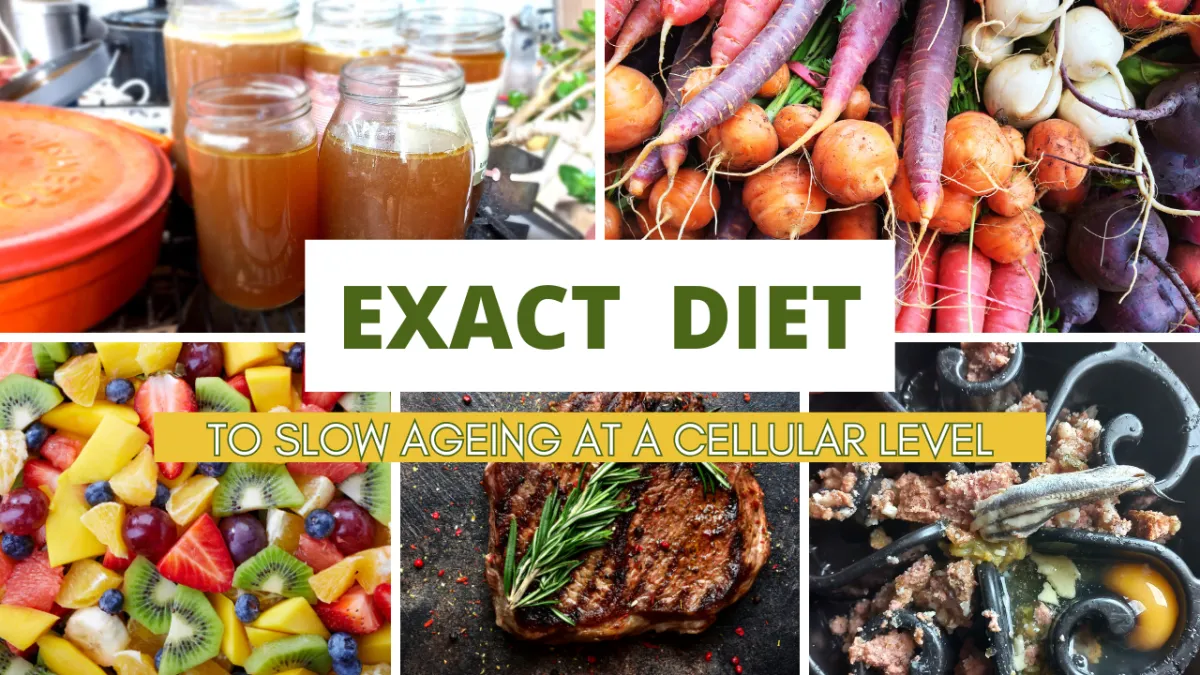
🥩 What to Eat, EXACTLY How Much
Learn exactly how much food, which foods to feed them, and which food-supplements can help them improve both their health span and their lifespan!
Need to feed kibble? Don't worry, we'll show you how to dramatically improve it... for almost no-cost.
Get Your FREE Guide - Click Here
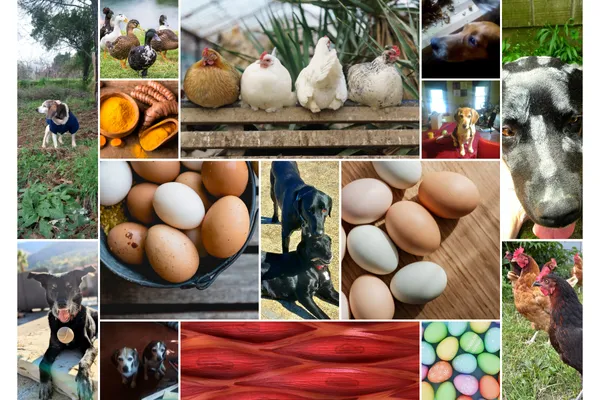
Can Dogs Eat Eggs?
Should Your Senior Dog Be Eating Eggs? The Truth About Raw Eggs, Joint Health & Senior Dogs
Eggs have been called “nature’s perfect protein” for a reason. But as a dog parent—especially a senior-dog parent—you may wonder:
🍳 Should my dog eat eggs?
🍳 Are raw eggs safe?
🍳 Is the eggshell membrane actually good for joint pain?
🍳 Do senior dogs need the extra calcium?
Great news: in most cases, eggs are one of the most powerful, inexpensive, nutrient-dense foods you can add to your dog’s diet—especially if they're older.
In this deep dive, we’ll cover exactly why eggs are so beneficial, when raw eggs are safe, how to boost your dog’s joint health using the egg membrane, and where egg quality makes an enormous difference.
Can Dogs Eat Eggs? (Table of Contents)
Should Your Senior Dog Be Eating Eggs? The Truth About Raw Eggs, Joint Health & Senior Dogs
Why Eggs Are One of the Best Foods for Dogs 🥚
1. Egg Protein: A Gold Standard for Senior Dogs
2. The Antioxidant Power: Lutein & Zeaxanthin 👁️🧬
3. The Eggshell Membrane: A Joint-Health Miracle 💥
4. Raw Eggs vs. Cooked Eggs: Which Is Best?
When Raw Eggs Are Safe to Feed 🥚✨
When You Should Cook the Eggs 🍳
5. Why Seniors (and Puppies!) Need More Calcium 🦴
6. How Many Eggs Can Dogs Eat?
7. Are Eggs Good as a Kibble Topper?
How to Feed Eggs for Maximum Benefit 🥚➡️🐶
9. Why Egg Quality Matters More Than Anything
10. Eggs as a Longevity Food for Senior Dogs 🧓🐾
Frequently Asked Questions (FAQ) ❓
1. Can dogs eat raw eggs every day?
2. Do raw eggs cause biotin deficiency in dogs?
3. How do I safely prepare eggshell powder?
5. Are eggs safe for dogs with pancreatitis?
7. Are eggs good for dogs with arthritis?
8. How often should I give the eggshell membrane?
9. Can diabetic dogs have eggs?
10. What’s the best way to store cooked eggs for my dog?
Final Thoughts: The Incredible, Edible Longevity Food for Dogs
Why Eggs Are One of the Best Foods for Dogs 🥚
For decades, athletes and bodybuilders have relied on eggs because of their bioavailability—how easily the body can use the protein inside. For dogs, this is just as true.
🔥 Key Benefits of Eggs for Dogs
🥚 Perfect protein source (complete amino acid profile)
🧬 Highly bioavailable — easier for adults and senior dogs to digest than many meats*
🧠 Rich in antioxidants like lutein and zeaxanthin
💪 Supports muscle retention, which senior dogs desperately need
🦴 Provides calcium when shells are used properly
🦵 Improves joint health via the eggshell membrane
💸 Extremely cost-effective — even high-quality eggs are inexpensive
*More improtantly, the protein in eggs is more bioavailable. This means your dog's body can actually use more of the protein. While eggs have a higher score than most meats, they REALLY excel vs the garbage proteins in most commercial dog foods.
1. Egg Protein: A Gold Standard for Senior Dogs
Eggs contain all the essential amino acids dogs need. As dogs age, they lose lean muscle and become more prone to frailty, weakness, and mobility issues. Muscle mass is like a retirement account for dogs.
That’s why high-quality, bioavailable protein is non-negotiable for seniors.
Nerd Alert 🔬
Egg protein consistently scores a 100 on the Biological Value (BV) scale, meaning the body uses nearly all of it efficiently. For comparison:
Beef: ~80 BV
Fish: ~75–85 BV
Soy: <75 BV
Kibble: varies widely and often poorly absorbed since many of the proteins are of ultra-low quality
This makes eggs one of the easiest proteins for the aging body to process.

2. The Antioxidant Power: Lutein & Zeaxanthin 👁️🧬
Eggs contain two powerful carotenoids:
🥚 Lutein
🥚 Zeaxanthin
These antioxidants help protect cells from free-radical damage and inflammation—major drivers of aging, cancer, and degenerative disease.
Dogs, especially seniors, benefit from these antioxidants in ways similar to humans.
Nerd Alert 2🔬
Lutein has been shown in canine studies to support:
💪 Eye health
💪 Cognitive function
💪 Immune function
💪 Reduced oxidative stress

3. The Eggshell Membrane: A Joint-Health Miracle 💥
Here’s where things get exciting.
That thin, filmy membrane inside the eggshell is loaded with:
Glucosamine
Chondroitin
Collagen
Hyaluronic acid
These are the very same compounds sold in expensive joint supplements.
Nerd Alert 3🔬
A 2016 study on arthritic dogs found that daily supplementation with eggshell membrane significantly improved joint pain and mobility.
What's that mean for your pup?
You can provide therapeutic joint support from the egg itself—no pricey supplements required.

Note: Do NOT use egg shells from supermarket eggs, even if they are free range, organic, etc. Eggs sold this way are (in many countries) treated with a chemical to keep them both shelf stable, and to combat salmonella.
Only use shells if you trust your egg source (from your chickens, a neighbour, farmer's markets where you can ask if the eggs are treated, etc.)
How to Use the Membrane
After feeding the raw or cooked egg:
1. Rinse out the shells
2. Let them dry
3. Grind them in a coffee grinder
4. Sprinkle ½ teaspoon (or more, depending on their size) on your dog’s food
5. Mix with bone broth for superior absorption and collagen
This supports:
Joint lubrication
Cartilage repair
Reduced inflammation
4. Raw Eggs vs. Cooked Eggs: Which Is Best?
The answer depends on egg quality, not the egg itself.
When Raw Eggs Are Safe to Feed 🥚✨
Raw eggs are beneficial if you trust the source.
Ideal eggs come from hens that are:
Free-range
Foraging outdoors
Eating bugs, grass, grit, and varied natural foods
These hens produce eggs with:
Stronger shells
Thicker membranes
Higher omega-3 levels
Better nutrition overall
Nature designed the egg to protect life—its shell and membrane are literal biological fortresses.
If You Have High-Quality, Pasture-Raised Eggs → Raw is great.

Maeby overseeing the food prep
In our case, the dogs eat homemade dog food that is a mix of raw and cooked.
Their ground pork or beef are gently cooked, but they eat raw eggs (and liver or other organ meats if no kidney issues are present)
When You Should Cook the Eggs 🍳
Supermarket eggs from caged hens have:
😞 Weak shells
😞 Thin membranes
😞 Higher bacterial risk
😞 Lower nutrient density
These hens:
Never touch the ground
Eat only corn and soy
Live under chronic stress
Produce nutritionally inferior eggs
If you’re using cheap grocery store eggs, simply cook them:
Hard-boiled
Scrambled
Soft-cooked
Lightly fried
Cooking neutralises potential pathogens.
5. Why Seniors (and Puppies!) Need More Calcium 🦴
Both ends of the age spectrum—puppies and seniors—require higher-than-normal calcium intake. Same for adult dogs.
Eggshell powder provides:
🐕 Bioavailable calcium
🐕 Trace minerals like magnesium
🐕 Bone support
🐕 Neuromuscular support
For senior dogs with mobility issues, calcium helps maintain bone density and neuromuscular balance.
For puppies, it supports proper skeletal development.
Again, if you trust your egg source, you can grind the shells to use for calcium. If not, buy an egg shell calcium supplement. They're cheap and provide easily absorbed calcium for your pup.
6. How Many Eggs Can Dogs Eat?
While there is likely a limit, feeding your dog eggs within reason is fine.
What's this mean? Don't feed a teacup Shi-tzu 15-eggs per day.
Remember that each egg is about 50g of food.
This is important if you are feeding homemade (or BARF RAW).
Eggs are a cheap way to add to the total grams of food your dog needs.
Here, the egg feeding usually looks like this:
🐶 Maeby and Grogu, beagles - 1 egg per day
🐶 Francesca, Ciro, Lucia, 22 - 25kg mixed maniacs, - 2 - 3 eggs per day
🐶 Nunzio, 35kg shepherd - 2 - 4 eggs per day
🐶 Carmela, mother of Lucia, Ciro, and Francesca, medium sized lab - 2 eggs per day
🐶 Ghangis, 27kg high energy doberman - 4 eggs per day
7. Are Eggs Good as a Kibble Topper?
Absolutely.
Eggs are one of the best toppers you can add to dry food because they:
🍳 Increase moisture
🍳 Add natural protein that's actually USABLE
🍳 Improve nutrient absorption
🍳 Boost palatability
🍳 Strengthen joints
For dogs with poor appetite—common in seniors—eggs can completely transform feeding time.
8. What About Cholesterol?
Good news:
Dietary cholesterol does NOT cause high blood cholesterol in dogs. (It doesn't in humans, either, in most cases, but that's a story for another article)
Dogs metabolise fats differently from humans. Eggs are safe even for dogs with many metabolic concerns unless your vet specifically restricts dietary fat.
How to Feed Eggs for Maximum Benefit 🥚➡️🐶
Here’s a simple plan:
Remember that eggs are a valuable protein that can replace much more expensive meats in a homemade diet. Medium eggs weigh around 50g.
So, every 1 egg can replace 50g of beef mince, chicken, turkey etc.
For some of my big dogs, this is invaluable, as they obviously eat a lot. Eggs are a cheap way to cut down on costs, while not sacrificing quality. In some ways, eggs are actually superior.
Your can feed them raw or cooked.
Trust your egg source? Save the shell
Rinse and dry
Grind the shell
Add 1/4 - 1/2 tsp to their meal
Want to boost results?
Add bone broth and an omega-3 source (sardines, salmon oil, anchovies).
9. Why Egg Quality Matters More Than Anything
Egg quality dictates:
🍳 Nutrient density
🍳 Omega-3 levels
🍳 Antioxidant levels
🍳 Shell strength
🍳 Membrane thickness
🍳 Safety of feeding raw
Cheap eggs = weak nutrition, weak membrane, higher risk
Pasture-raised = superior nutrition, superior joint-health benefits
Even then, eggs are still inexpensive—usually around 30 cents each even for high-quality options.
Important: what if you can only afford cheap eggs?
Use them! Just avoid feeding them raw, and toss the shells. However, even a lower quality egg is MUCH better than commercial dog food.
10. Eggs as a Longevity Food for Senior Dogs 🧓🐾
When we talk longevity, we want foods that support:
Joint function
Cellular repair
Brain health
Strong immunity
Eggs check every box.
For adult and senior dogs especially, few foods offer such a powerful nutritional punch for such a low cost.
If you're already cooking at home, eggs blend seamlessly into your recipes. If you're still feeding kibble, eggs are the perfect “gateway” whole food.
Frequently Asked Questions (FAQ) ❓
1. Can dogs eat raw eggs every day?
Yes—if they come from a trusted, pasture-raised source.
If you buy standard supermarket eggs, cook them.
2. Do raw eggs cause biotin deficiency in dogs?
No.
Biotin deficiency from eggs is extremely rare and would require feeding raw egg whites only in massive quantities. Feeding whole eggs (with yolk) prevents this.
The only time dogs would eat a lot of egg whites is as part of a kidney disease diet. But, even then, there is enough biotin in the rest of the diet to prevent this.
3. How do I safely prepare eggshell powder?
1. Rinse shells
2. Dry completely
3. Grind into a very fine powder
4. Store in an airtight jar
4. Can eggs cause allergies?
Egg allergies are uncommon, but possible.
If your dog develops itching, loose stool, or ear inflammation, pause eggs and observe. The chances of an allergy developing is extremely low, however.
5. Are eggs safe for dogs with pancreatitis?
Dogs with active pancreatitis often need low-fat diets, but a single egg may still be tolerated depending on severity. Egg whites may be used. Always ask your vet first in the case of dealing with a specific disease.
6. Can puppies eat eggs?
Absolutely. We focus on adult and senior dog nutrition here, but puppies are pretty cool, too.
Puppies benefit from the protein, calcium, and nutrients in eggs—just adjust the portion size to avoid excess calories.
The irony is, while being sponsored by Purina, Science Diet, Hills, etc., all the dogs who participate in dog shows are feed eggs to produce a shiny coat.
7. Are eggs good for dogs with arthritis?
Yes!
The eggshell membrane is a scientifically supported joint-health booster. Bone broth is also great, along with turmeric paste.
8. How often should I give the eggshell membrane?
Daily is ideal for senior dogs with mobility issues.
9. Can diabetic dogs have eggs?
Yes.
Eggs contain almost no carbohydrates, and help stabilise blood sugar.
10. What’s the best way to store cooked eggs for my dog?
Hard-boiled eggs keep 5–7 days in the fridge.
Scrambled or cooked eggs keep 3–4 days.
Final Thoughts: The Incredible, Edible Longevity Food for Dogs
Eggs offer a rare combination in dog nutrition:
🐕🦺 Incredible nutrition
🐕🦺 Joint support
🐕🦺 Antioxidants
🐕🦺 High-quality protein
🐕🦺 Affordability
Whether raw or cooked, they’re one of the best foods you can add to your dog’s bowl—especially if your pup is in their golden years.
If you want to take things further, consider learning to cook healthy homemade meals for long-term health benefits. Eggs are an easy first step to making your senior dog feel better, move better, and live longer.


Contact
Navigation
Reach out!
©2026 . All Rights Reserved | Privacy Policy